
Should You Repair or Replace Your Garage Door? An Honest Homeowner's Guide
Not sure whether to fix your current garage door or invest in a new one? This honest guide walks through the costs, the warning signs, and the smart questions to ask before you decide.
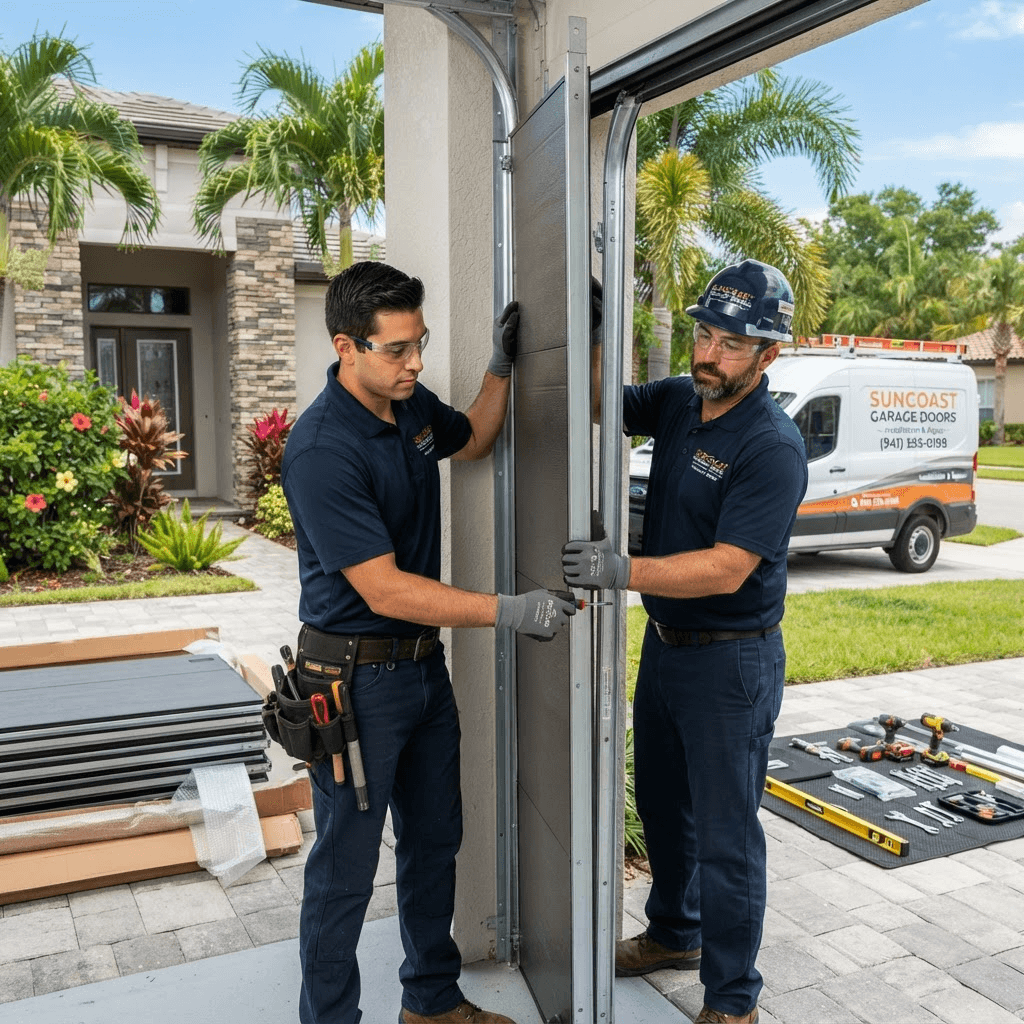
It's one of the most common questions we hear from homeowners across Naples and Southwest Florida: 'Should I just repair my garage door, or is it time to replace the whole thing?' It's a fair question, and the honest answer is that it depends. A single broken spring doesn't mean you need a new door — but a door that's rusted, dented, poorly insulated, and failing every few months might be costing you more in repeated repairs than a replacement would.
At Titan Garage Door Service & Repair LLC, we believe in giving straight answers, not hard sells. This guide will walk you through how to think about the repair-versus-replace decision, the warning signs that point toward each option, and the questions worth asking before you spend a dollar. Our goal is to help you make the choice that's genuinely best for your home and budget.
When a Repair Is the Right Call
The good news is that the majority of garage door problems are straightforward, affordable repairs. Garage doors are built from individual components, and when one part fails, replacing that part often restores the door to like-new operation. If your door is otherwise in good shape — solid panels, sound structure, reasonable age — a targeted repair is almost always the smart, cost-effective choice.
Common Problems That Usually Just Need a Repair
- A broken torsion or extension spring — the single most common failure, and a routine fix.
- Worn or noisy rollers that need replacing or upgrading to nylon.
- A misaligned or malfunctioning safety sensor causing the door not to close.
- A frayed or snapped lift cable.
- An opener issue like a dead remote, bad logic board, or worn gear.
- A single dented panel on an otherwise sound door.
In each of these cases, the underlying door is fine — it just needs a specific component serviced. Repairing is faster, less expensive, and perfectly sensible.
When Replacement Starts to Make Sense
There comes a point, though, where continuing to repair an aging door is like pouring money into a car that breaks down every month. Here are the signs that tip the scales toward replacement.
1. Your Door Is Old and Failing Repeatedly
Garage doors typically last 15 to 30 years depending on quality and maintenance, but in Southwest Florida's harsh coastal climate, wear happens faster. If your door is well into its second decade and you're calling for a repair every few months, those repair bills add up. At some point, a new door becomes the better financial decision — and it comes with the reliability of all-new components.
2. Significant Structural Damage
A single dented panel can often be replaced. But if multiple panels are dented, cracked, warped, or rusted through, the door's structural integrity is compromised. This is common after a storm, a vehicle impact, or years of salt-air corrosion. A structurally damaged door is not only unsightly but also less safe and less secure, and replacement is usually the wiser path.
3. Poor Insulation and High Energy Bills
Older doors, especially single-layer steel or wood doors, offer little insulation. In the Florida heat, an uninsulated garage becomes an oven that radiates heat into your home and forces your air conditioning to work harder. Upgrading to a modern insulated door can improve comfort, reduce noise, and help lower cooling costs — benefits an old door simply can't match.
4. You Want Better Storm Protection
If your current door isn't wind-rated or impact-rated, hurricane season is a real vulnerability. As we've covered before, a failed garage door can lead to catastrophic home damage during a storm. Replacing an older door with a code-compliant, wind-rated model is one of the most valuable upgrades a Southwest Florida homeowner can make.
How We Help You Decide
When our technicians evaluate your door, we look at the whole picture: the age and condition of the panels and hardware, the number and cost of recent repairs, the door's insulation and storm rating, and your goals for the home. Then we give you an honest recommendation. Sometimes that means a simple repair will serve you well for years to come. Other times, we'll explain why replacement is the better value — and we'll never pressure you into spending more than you need to.
“The right answer isn't always the most expensive one. A good technician tells you when a repair will serve you just fine — and is honest when it won't.”
Questions to Ask Before You Decide
- How old is my door, and how many repairs has it needed recently?
- Is the damage limited to one component, or is the door structurally compromised?
- Would a new insulated door meaningfully lower my cooling costs?
- Is my current door rated to handle the wind loads for my area?
- What's the total cost of continuing to repair versus replacing?
- What are my goals — reliability, appearance, efficiency, storm protection, or resale value?
The Value of a New Garage Door
When replacement is the right choice, a new garage door delivers benefits that go well beyond simply working again. Modern doors offer better insulation for the Florida climate, quieter operation, improved security features, wind- and impact-rated options for storm season, and a huge range of styles and finishes to complement your home. A professionally installed door is precisely balanced, correctly tensioned, and safety-tested — giving you peace of mind for years.
Honest Advice for Naples and Southwest Florida
Whether you need a quick repair or a full replacement, Titan Garage Door Service & Repair LLC serves homeowners throughout Naples, Golden Gate Estates, Bonita Springs, Estero, Fort Myers, Cape Coral, Punta Gorda, Sarasota, and the surrounding communities. We'll assess your door's condition, explain your options in plain language, and provide an upfront estimate so you can make an informed decision. No pressure, no hard sell — just honest guidance and quality workmanship. Reach out today and we'll help you figure out the smartest path forward for your home.
Comparing Materials for Southwest Florida Homes
Steel is the most common residential garage door material because it offers strength, design flexibility, and relatively low maintenance. Multi-layer steel doors can include insulation and an interior backing for a finished appearance. The quality of the finish and hardware matters in coastal areas, where salt exposure can attack scratches and unprotected edges. Homeowners should ask about paint warranties, corrosion coverage, steel gauge, section construction, and recommended cleaning rather than comparing doors only by exterior style.
Aluminum and glass doors create a clean, modern look and resist red rust, but glass adds weight and privacy considerations, while aluminum can dent. Full-view doors must be selected carefully for wind and impact requirements. Wood offers distinctive warmth and character but requires ongoing sealing or painting in Florida's sun and humidity. Composite overlays can deliver a carriage-house appearance with less maintenance than natural wood. The best material is the one that balances your home's architecture, exposure, maintenance tolerance, storm requirements, and budget.
Understanding Insulation Without the Jargon
Garage door insulation is commonly described with an R-value, which indicates resistance to heat flow. A higher value generally means better insulation, but the number is not the whole story. Section joints, perimeter weather seals, windows, installation quality, and air leakage around the opening all influence real-world performance. A well-installed insulated door with intact seals can moderate garage temperatures, reduce outside noise, and make rooms adjacent to the garage more comfortable.
Insulation is especially useful when the garage is attached, faces intense afternoon sun, contains laundry equipment, serves as a workshop, or has occupied rooms above it. It also adds rigidity to many door designs, helping sections feel more substantial and operate quietly. That does not mean every detached garage needs the highest available R-value. An honest comparison should consider how the space is used and whether the added investment supports your actual goals.
Don't Forget the Opener and Supporting Hardware
A replacement door does not automatically require a new opener, but the existing unit should be evaluated. The opener must be compatible with the new door's size, weight, track configuration, and required features. A healthy recent opener may transfer perfectly well after force and travel settings are recalibrated. An aging, noisy opener with no battery backup or modern safety features may be worth replacing during the same visit, especially when installation access is already available.
Springs, tracks, cables, drums, rollers, hinges, brackets, and weather seals form a system with the door. Reusing incompatible or badly worn hardware can undermine the performance of new sections. A complete proposal should identify what is included, what will be reused, how the old door will be removed, whether permits are required, what warranty applies to labor and materials, and how the finished system will be tested. Comparing written scope is more useful than comparing bottom-line prices that may include different levels of work.
Planning the Project From Estimate to Final Walkthrough
A good installation begins with accurate measurements and a review of the opening, headroom, side room, backroom, framing, floor level, electrical outlet, and opener location. The consultant should discuss design, insulation, windows, storm rating, lead time, finish, and hardware options. Custom colors or sizes may take longer than stocked models, so plan ahead if the project is tied to a home sale, renovation, or hurricane-season deadline.
Before installation day, clear vehicles and stored items away from the work area and provide a safe path to the garage. The crew should remove the old sections and hardware, install the approved system according to manufacturer specifications, tension and balance the springs, connect the opener, and test every safety feature. Do not consider the job complete until you receive an operating demonstration, remote programming help, maintenance guidance, warranty information, and the relevant product documentation.
Calculating Long-Term Value, Not Just Today's Price
The least expensive repair can be the right choice when it reliably extends the life of a sound door. But a series of inexpensive repairs is not automatically a bargain. Add the cost of recent service calls, likely near-term failures, energy loss, rust treatment, and inconvenience. Then compare that total with the useful life, warranty, storm protection, insulation, security, and appearance of replacement. This simple exercise turns an emotional decision into a practical one.
Home value matters too. Because the garage door occupies so much visual space, replacement can transform the exterior without a major remodel. A style that complements the roof, trim, windows, and architectural lines looks intentional and can strengthen a buyer's first impression. Choose a design that fits the neighborhood and avoid short-lived trends if resale is a priority. Functional upgrades such as quiet rollers, smart controls, battery backup, and hurricane-rated construction are easier for future buyers to understand and value.
Red Flags When Comparing Garage Door Quotes
- A recommendation to replace the entire door before the technician has inspected individual components.
- A price with no written scope, product model, wind rating, warranty, or explanation of included hardware.
- Claims that every door fits every opening or that local code and product approvals do not matter.
- Pressure to sign immediately without time to compare repair and replacement options.
- A plan to reuse visibly damaged tracks, cables, springs, or brackets with an incompatible new door.
- No final balance test, safety-reversal test, operating demonstration, or documentation.
Frequently asked questions
How long does a garage door last in Florida?
Most doors last 15 to 30 years, but Southwest Florida's heat, humidity, and salt air can shorten that lifespan. Regular maintenance helps, but coastal doors often show wear sooner than doors in drier climates.
Is it cheaper to repair or replace a garage door?
For most single-component failures, repair is far cheaper and completely sensible. Replacement becomes the better value when a door is old, structurally damaged, or failing repeatedly, since ongoing repair costs add up.
Will a new garage door really lower my energy bills?
An insulated door can help, especially if your garage is attached or you spend time in it. In the Florida heat, reducing heat transfer through an uninsulated door can ease the load on your air conditioning.
How long does a new door installation take?
Most standard residential installations are completed in a single visit. Custom or complex doors may take longer — we'll give you a clear time estimate when we confirm your order.
This article provides general information and is not a substitute for a professional garage door inspection. For guidance specific to your home, contact Titan Garage Door Service & Repair LLC.