
5 Signs Your Garage Door Spring Is About to Fail (And What to Do Next)
Your garage door springs do the heavy lifting every single day. Learn the five warning signs of spring failure, why they matter for Naples homeowners, and how to stay safe before you're stuck.
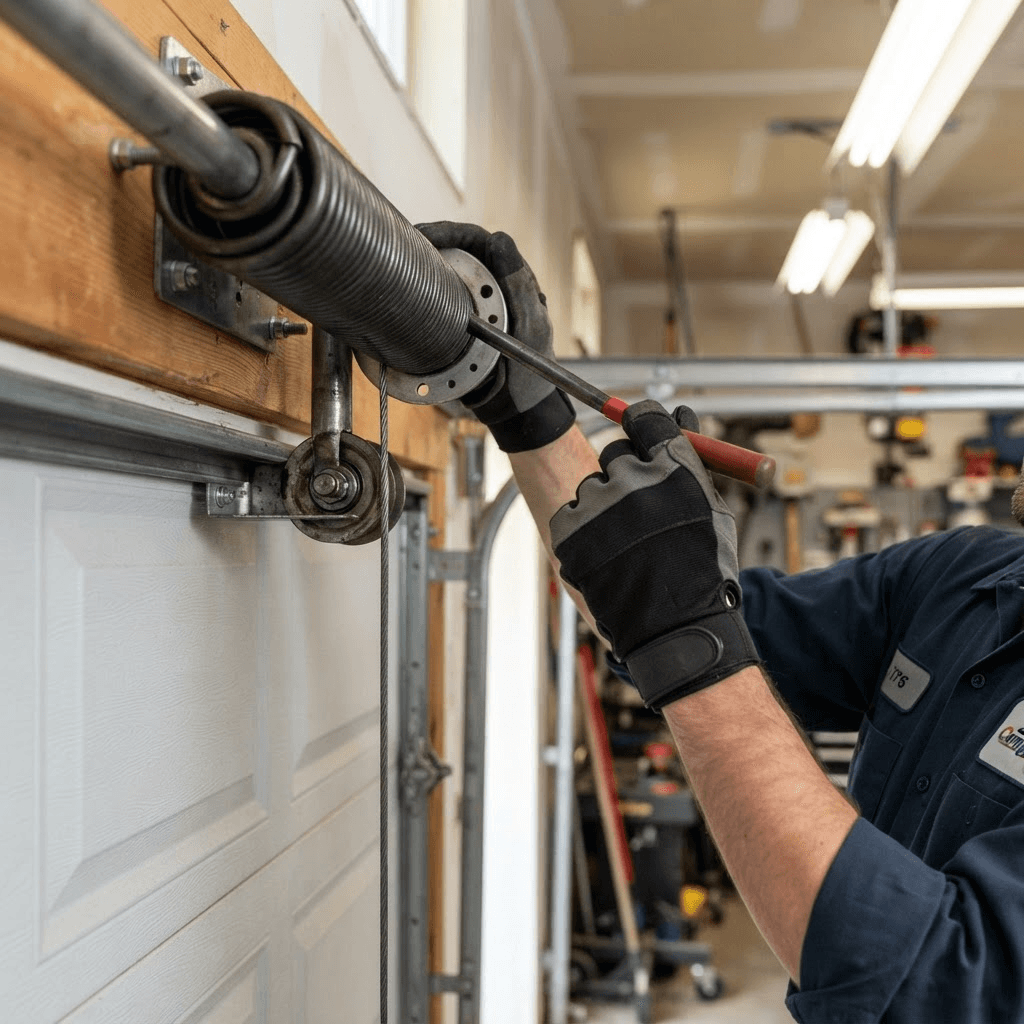
Your garage door is the largest moving object in your home, and it can weigh anywhere from 150 to more than 350 pounds. What makes lifting all that weight feel effortless? The springs. These hard-working components store and release energy every time the door goes up and down, and in Naples and across Southwest Florida they cycle through thousands of open-and-close movements each year. When a spring starts to fail, it rarely gives you a formal warning — but it does leave clues.
At Titan Garage Door Service & Repair LLC, spring failure is one of the most common calls we answer, and it's also one of the most preventable emergencies. Learning to recognize the early symptoms can save you from a door that traps your car in the garage, a startling middle-of-the-night bang, or a dangerous do-it-yourself repair gone wrong. This guide walks through the five biggest warning signs your garage door spring is about to fail, explains why they happen, and tells you exactly what to do next.
How Garage Door Springs Actually Work
Before diving into the warning signs, it helps to understand what your springs are doing. Most residential doors in the Naples area use one of two systems: torsion springs, mounted horizontally on a metal shaft above the door opening, or extension springs, mounted along the horizontal tracks on either side of the door. Torsion springs twist and store energy as the door closes, then release it to help lift the door. Extension springs stretch and contract to do the same job.
Both types are rated by cycles — one cycle equals a single open-and-close. A standard spring is often rated for around 10,000 cycles, which sounds like a lot until you realize a busy family may open the door six to eight times a day. Do the math and a typical spring can reach the end of its life in as little as three to five years. In our hot, humid, salt-air climate, corrosion can shorten that lifespan even further.
Sign #1: Your Garage Door Feels Unusually Heavy
This is the clearest early indicator, and it's one you can safely test yourself. With the door closed and the opener disconnected (pull the red emergency release cord), try lifting the door manually about halfway. A properly balanced door with healthy springs should feel light, hold its position on its own, and move smoothly. If it feels like you're deadlifting a barbell, or if it slams back down the moment you let go, your springs are losing their ability to counterbalance the door's weight.
A heavy door doesn't just signal aging springs — it also puts enormous strain on your opener. Many homeowners in Naples call us about a 'broken opener' only to discover the real culprit is a fatigued spring forcing the motor to work far harder than it was designed to. Continuing to run the opener against failing springs can burn out the motor and turn one repair into two.
Sign #2: Jerky, Uneven, or Hesitant Movement
A door with healthy springs glides in one smooth motion. When springs begin to fail, you may notice the door jerking, hesitating partway up, or moving unevenly from side to side. Uneven movement is especially concerning because it can mean one spring is weaker than the other, throwing the whole system out of balance and putting extra stress on the cables, rollers, and tracks.
You might also see the door 'bounce' near the top of its travel or shudder as it changes direction. These stutters are your door telling you the counterbalance system is no longer doing its job cleanly. Left unaddressed, an imbalanced door accelerates wear on nearly every other component.
Sign #3: A Loud Bang From the Garage
If you hear a sudden, sharp bang — almost like a firecracker or a gunshot — coming from your garage, there's a good chance a torsion spring has snapped. This is the sound of all that stored tension releasing at once. It often happens when no one is even using the door, such as early in the morning or in the middle of the night, because temperature changes can push an already-fatigued spring past its breaking point.
Sign #4: Visible Gaps or Damage in the Spring
Sometimes the evidence is right in front of you. Take a look at the torsion spring mounted above your door. A healthy spring has tightly wound, continuous coils. If you see a two- to three-inch gap somewhere along the coil, that's a clear sign the spring has broken — even if the door still seems to work for now. On extension springs, look for stretched-out sections, rust, or coils that no longer sit snugly together.
Rust is a particularly important thing to watch for in our coastal environment. Corroded coils create friction, which increases wear and can cause a spring to fail earlier than its rated lifespan. If you spot orange discoloration or flaking on the metal, it's worth having a technician evaluate the spring's remaining life.
Sign #5: The Door Slams Shut or Closes Too Fast
When springs weaken, they lose the ability to control the door's descent. Instead of lowering in a smooth, controlled motion, the door may drop quickly or slam against the floor. This is both a safety hazard — especially for children, pets, and vehicles — and a sign of significant spring fatigue. A door that closes faster than it used to should be inspected right away.
What Causes Springs to Wear Out?
- Normal cycle fatigue — every open and close uses up a small part of the spring's rated life.
- Rust and corrosion from Southwest Florida's humidity and salt air.
- Lack of lubrication, which increases friction between the coils.
- Improper spring sizing, where a spring was never matched to the door's true weight.
- Temperature swings that repeatedly expand and contract the metal.
Why You Should Never Replace Springs Yourself
It can be tempting to search for a DIY tutorial, but garage door springs are genuinely dangerous. They store an enormous amount of energy, and releasing that tension without the correct tools and training can cause serious injury. Every year, homeowners are hurt attempting spring replacements. The winding bars can slip, the spring can release unexpectedly, and the heavy door can fall.
Professional replacement also ensures the new springs are correctly matched to your specific door's weight and the cycle life you need. At Titan Garage Door Service & Repair LLC, we replace torsion and extension springs safely, recalibrate the door's balance, and test the opener's force settings so your new springs are protected from day one. When appropriate, we replace springs in matched pairs, because if one has reached the end of its life, the other is usually close behind.
“A ten-minute spring inspection during a routine tune-up can prevent a middle-of-the-night emergency and hundreds of dollars in cascading damage.”
How to Extend the Life of Your Garage Door Springs
- Schedule an annual professional tune-up to catch wear before it becomes failure.
- Ask your technician to lubricate the springs with a garage-door-rated lubricant twice a year.
- Keep the door balanced — have any jerky or uneven movement checked promptly.
- Watch for rust and address corrosion early, especially in coastal Naples neighborhoods.
- Consider high-cycle springs when replacing, for longer service life on busy doors.
Serving Naples and All of Southwest Florida
Titan Garage Door Service & Repair LLC provides fast, professional garage door spring repair and replacement throughout Naples, Golden Gate Estates, Bonita Springs, Estero, Fort Myers, Cape Coral, and the surrounding Southwest Florida communities. Whether you've heard the tell-tale bang, noticed your door struggling, or simply want a preventative inspection before spring season, our technicians arrive equipped to diagnose the problem and get your door moving safely again — with upfront pricing before any work begins.
What to Expect During a Professional Spring Replacement
A professional spring repair starts with more than simply removing the broken coil. The technician first secures the door, disconnects the opener, and inspects the complete counterbalance system. That inspection includes the lift cables, drums, center bearing, end bearing plates, rollers, hinges, and tracks. This matters because a spring failure can place sudden stress on nearby components, and replacing the spring without finding collateral wear may leave the door unreliable. The technician also identifies the door's construction, dimensions, and actual weight so the replacement springs can be selected accurately rather than guessed from the old hardware.
Correct spring sizing is essential. A spring that is too strong may make the door rise on its own and strain the opener while closing. One that is too weak leaves the door heavy and forces the opener to lift weight it was never intended to carry. Professionals calculate the wire size, inside diameter, length, and torque requirements needed for a balanced result. Homeowners who use the garage as their main entrance may also want to ask about higher-cycle springs. They cost more than standard-cycle parts but can offer a substantially longer useful life for a busy household.
After installation, the technician winds the new torsion springs to the correct tension, checks cable seating on both drums, and performs a manual balance test. A properly balanced door should remain near waist height without drifting sharply upward or dropping. The opener is then reconnected and tested through complete cycles. Safety reversal, photo-eye alignment, travel limits, and force settings should all be checked. This final calibration is important because opener settings that compensated for a weak old spring may be inappropriate once the door is balanced again.
Before the appointment ends, ask what caused the failure, whether both springs were evaluated, what cycle rating was installed, and what maintenance schedule is recommended. Keep the service information with your home records, including the replacement date and warranty details. That simple documentation makes future maintenance easier and gives you a useful reference if you sell the home. The result of a quality garage door spring replacement should be a door that feels noticeably lighter by hand, moves evenly, operates quietly, and places less strain on the automatic opener.
Frequently asked questions
How long do garage door springs last in Florida?
Most standard springs are rated for around 10,000 cycles, which typically translates to three to five years for an average household. Florida's humidity, salt air, and heat can shorten that lifespan, so regular inspections are especially valuable in the Naples area.
Can I still use my garage door with a broken spring?
No. A door with a broken spring can be extremely heavy, unbalanced, and prone to falling. Disconnect the opener, keep the area clear, and call for professional service right away.
Should I replace both springs at once?
If your door uses two springs of the same age and one has failed, we usually recommend replacing both. The second spring is typically near the end of its life, and replacing them together saves you a second service call.
How quickly can Titan respond to a broken spring?
We offer 24/7 emergency service across Naples and Southwest Florida and aim to respond quickly. Actual arrival times vary by location and demand, so please confirm availability when you call.
This article provides general information and is not a substitute for a professional garage door inspection. For guidance specific to your home, contact Titan Garage Door Service & Repair LLC.